


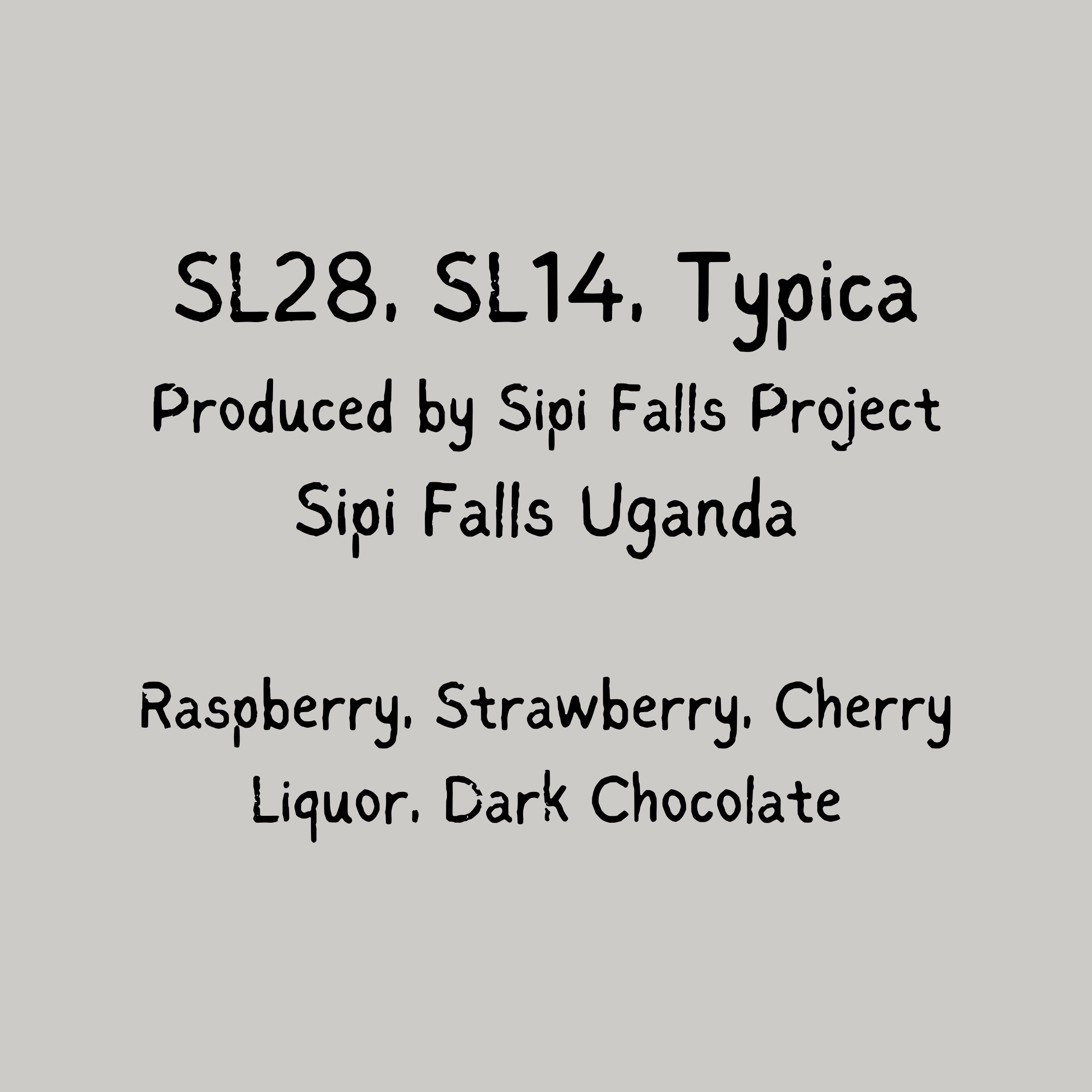
Why We Love This Coffee
We chose this lot because it lets us back real work at origin and it tastes brilliant. It comes through the Sipi Falls Coffee Project on Mt. Elgon — a long standing, locally staffed effort focused on farmer training, clean processing, and steady buying.
The story matters. In the 1970s a frost in Brazil pushed global demand onto Sipi. Money and mills arrived fast; when the crisis passed, much of it disappeared just as quickly. Some of those buildings still sit there. Every Cup Counts (Commonfolk / David Flood) reminded us that progress is about showing up — paying fairly, buying consistently, and building trust. This coffee is our way of doing that.
In the cup it’s sweet with high quality acidity, but the standout is the finish: layered, long, and complex dark chocolate with cherry liqueur depth. It’s our favourite finish in the lineup. On pour over you’ll get red fruit clarity with that dark, refined aftertaste. As espresso it leans into chocolate-cherry; with milk it’s plush and complete.
We picked it to do our part for an origin that deserves more attention — and because the cup profile is exactly what we want to showcase.
Origin — Sipi Falls, Uganda
Grown on the western slopes of Mt. Elgon in the Kapchorwa District near the Kenyan border, this lot comes from altitude 1,300–1,900 masl where rich volcanic soils, cool mountain air, and steady rainfall slow cherry maturation and build density. The Sipi Falls watershed (a trio of waterfalls) helps shape a stable, cool microclimate that keeps sugars developing and acids clean.
This coffee is produced by 10,000+ smallholders in the Sipi Falls Coffee Project (est. 1999 by Kawacom). Farms average 0.5 ha, intercropped with food crops and shade trees. The project is organically certified and locally staffed, offering training in sustainable farming and quality control, plus community programs around water, education, and health. It’s steady, practical work that lifts quality and keeps more value close to home.
Varietal — Typica, SL14, SL28
A mixed heritage common to Mt. Elgon. Typica is one of Arabica’s original lineages, traced from Ethiopia through Yemen and carried worldwide; older East African plantings still include it. SL14 and SL28 are mid 20th century selections from Scott Agricultural Laboratories (Kenya), chosen from drought tolerant and Bourbon/Typica group material for adaptation at altitude. These cultivars spread across Uganda and the Mt. Elgon region and are often interplanted on smallholder farms.
Processing — Anaerobic Natural
- Selective pick: Ripe cherries are hand harvested and sorted to remove underripes/defects.
- Sealed tank ferment: Whole cherries rest in oxygen free tanks, allowing native microbes to break down sugars in a controlled way. This builds fruit intensity and a clean, structured acidity.
- Sun drying: After fermentation, cherries are dried on raised beds, turned regularly for even drying and clean fruit character.
- Final prep: Dried coffee is rested, hulled, and sorted for a consistent 15+ screen and cup clarity.
Sipi Falls Coffee Project
Established in 1999, the Sipi Falls Coffee Project is a locally staffed network supporting 10,000+ smallholders across Mt. Elgon. Farms average ~0.5 ha and are organically certified. The project focuses on steady, practical work: farmer training (good agronomy, quality control, internal control systems), clean water access, education sponsorships, and health initiatives. Reliable buying and careful processing keep more value close to home and lift cup quality year after year.
Every Cup Counts (Commonfolk / David Flood) is why we paid attention and why we chose to buy. The film isn’t about hype; it’s about showing up. This lot is our way of backing that kind of work with real purchases, not just words.
Tasting Notes
Core profile: sweet red fruit, dark chocolate, cherry liqueur finish. Clean acidity, long and layered aftertaste.
Pour over: red cherry, ripe berries, cocoa tea like clarity with that deep, chocolate cherry finish.
Espresso: dark chocolate, black cherry, syrupy body
Transparency
We believe in being transparent about the coffees we source. The green coffee for this lot was purchased at$37 AUD per kilogram (before shipping). At Two Places Project, we aim to change the way people perceive coffee prices, creating a different value proposition for specialty coffee by paying a fair price to producers and supporting the quality and sustainability of their work.